-
 Repower British Industry - Invest in our future!With the right industrial strategy, investment in clean technologies and learning from workers' expertise, Britain can safeguard hundreds of thousands of jobs. We won’t accept more communities being gutted by industrial decline. It’s time for workers and communities to stand together and demand government invests to future-proof our industries, protect good jobs and make our workplaces cleaner and more competitive. Sign up to Repower British Industry to hear more about the campaign and how you can get involved.3 of 100 Signatures
 -
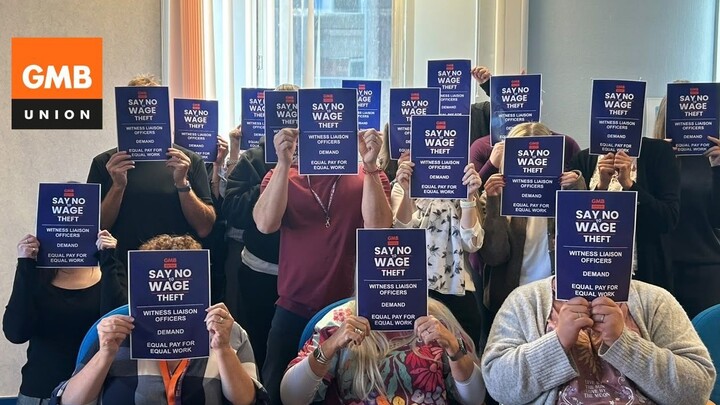 Support South Yorkshire Witness Liaison Officers - Equal Pay for Equal Work!1. Witness Liaison Officers at South Yorkshire Police earn £5,000 LESS than West Yorkshire Witness Liaison Officers, despite doing the same job. In short, people who deliver a vital and difficult service are being paid less than those in identical roles only 45mins up the M1. 2. Witness Liaison Officers provide support and assistance to victims and witnesses throughout the criminal justice process, often speaking with and supporting highly vulnerable individuals including rape, domestic and child abuse victims. 3. South Yorkshire Police admit Witness Liaison Officers in West and South Yorkshire do the same job, yet South Yorkshire still refuse to accept that the pay rates for the role are too low, or that their job evaluation system is broken, well, broken for those at the bottom, not those in Senior Command who use a different job evaluation system similar to the one in West Yorkshire. The people who provide support to some of the most vulnerable at an incredibly difficult time deserve better. Please sign and share your support for Witness Liaison Officers.394 of 400 SignaturesCreated by Joe Wheatley
 -
.jpg) Save the Arts: Letter of No Confidence in Communities Minister Gordon LyonsGordon Lyons was appointed Communities Minister – a role which covers arts and culture – in February 2024. The Arts Council Northern Ireland provided a 10-year plan for the arts between 2024-2034, which the Communities Minister chose not to sign off. In 2025, the ACNI stated that “The arts budget continues to present significant challenges to the sector and to the Arts Council’s ability to meet the needs of artists, arts organisations and their audiences.” In 2025, the Minister promised an Arts Policy. On 3 July 2025 the Committee for Communities also requested that the Minister create an arts and culture strategy and secure proper funding for the arts. This has not taken place. A budget of £21.27 million for 2026/27 is the level identified by ACNI in February 2026 as necessary to stabilise core infrastructure, strengthen support for individual artists, improve regional distribution and enhance organisational capacity. At just £5.07 per head in 2023/24, Northern Ireland Arts Council (ACNI) receives the lowest per capita arts council funding of anywhere in the UK - less than half that of the second-lowest, Wales. A real-terms cut of almost 40% to Arts Council Northern Ireland funding over the past 10 years has deeply impacted artists, producers and communities. Further info here: Save the Arts: Lobby Stormont2,235 of 3,000 SignaturesCreated by Gareth Forest
Save the Arts: Letter of No Confidence in Communities Minister Gordon LyonsGordon Lyons was appointed Communities Minister – a role which covers arts and culture – in February 2024. The Arts Council Northern Ireland provided a 10-year plan for the arts between 2024-2034, which the Communities Minister chose not to sign off. In 2025, the ACNI stated that “The arts budget continues to present significant challenges to the sector and to the Arts Council’s ability to meet the needs of artists, arts organisations and their audiences.” In 2025, the Minister promised an Arts Policy. On 3 July 2025 the Committee for Communities also requested that the Minister create an arts and culture strategy and secure proper funding for the arts. This has not taken place. A budget of £21.27 million for 2026/27 is the level identified by ACNI in February 2026 as necessary to stabilise core infrastructure, strengthen support for individual artists, improve regional distribution and enhance organisational capacity. At just £5.07 per head in 2023/24, Northern Ireland Arts Council (ACNI) receives the lowest per capita arts council funding of anywhere in the UK - less than half that of the second-lowest, Wales. A real-terms cut of almost 40% to Arts Council Northern Ireland funding over the past 10 years has deeply impacted artists, producers and communities. Further info here: Save the Arts: Lobby Stormont2,235 of 3,000 SignaturesCreated by Gareth Forest
-
 Tax the banks — cut our bills!Getting banks to pay more tax on their profits to help us with the cost of living is common sense. They’re raking in billions while the rest of us are struggling. We've seen this pattern before. The high interest rates introduced after Putin's illegal invasion in Ukraine combined with a reduced bank surcharge tax — brought down to just 3% by the Conservatives — led to a bumper pay day for the banks. The economic chaos sparked by Trump's illegal war in Iran is already seeing this pattern continue at our expense. Increasing the bank surcharge could raise billions to help fund a social tariff scheme to reduce energy bills. The TUC's proposed social tariff would cut typical bills by between £340 and £520 a year for half of households (those on low and lower-middle incomes), with those in greatest need getting the most off. But when energy costs spike, as is happening now, support would ratchet up so that two-thirds of households would get an emergency boost to match their needs. At current (Summer 2026) rates, this would see: • The lowest-income households typically saving £520 a year • Middle-income households typically saving £340 a year • And upper-middle earners saving £170 a year If put in place now, the scheme (including the emergency tariff) would cost only £6bn per year. Setting the bank surcharge at 35% — the level of the Conservatives’ windfall tax on energy companies — could raise up to £60bn over four years. Even a 16% surcharge would be enough to cover the scheme. History shows that when working people act together, we can win a fairer economy that works for everyone. We can do that again today. It's time the banks paid their fair share in tax. It's time for a social tariff to cut energy bills.26,780 of 30,000 SignaturesCreated by Unity Works
 -
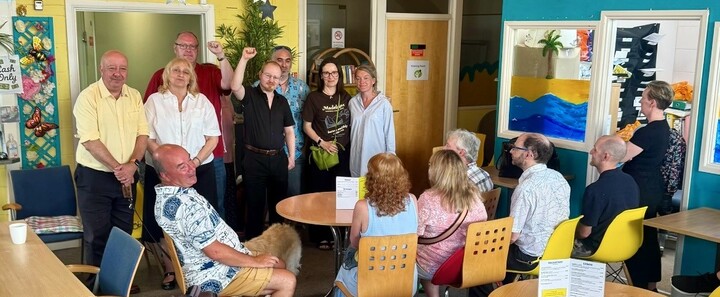 Reconsider the Closure of Torquay DWP Office and Protect Local JobsThis matters because the proposed closure isn't about the work ending, it's about an office closing. The jobs still need doing, but experienced staff could be forced out of the DWP or asked to travel much further for work. In an area with limited opportunities for similar jobs, that would be a real blow to workers, their families and the local economy.307 of 400 SignaturesCreated by Keir Morrison
 -
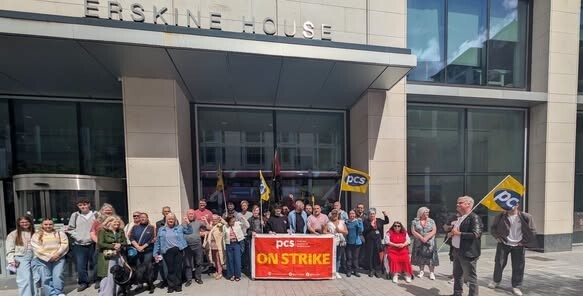 Stop cuts to jobs and hours: support low-paid Sodexo workers at Belfast UK Government hubThis dispute exemplifies the failings of outsourcing government work for profit. Cutting hours and/or staff is not in the interests of the workers delivering these important services, nor is it in the interests of the public sector workers to whom they deliver these services These cuts only benefit Sodexo. PCS believes that outsourcing is a failed experiment, and this dispute is further evidence of that.779 of 800 SignaturesCreated by Keir Morrison
 -
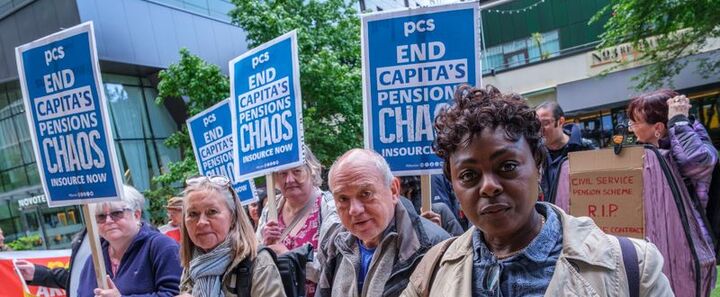 Stop the Civil Service Pension Crisis: Bring Pension Administration Back In-HouseCivil servants deserve a pension service they can trust. Sign this petition to demand action now.20,667 of 25,000 Signatures
 -
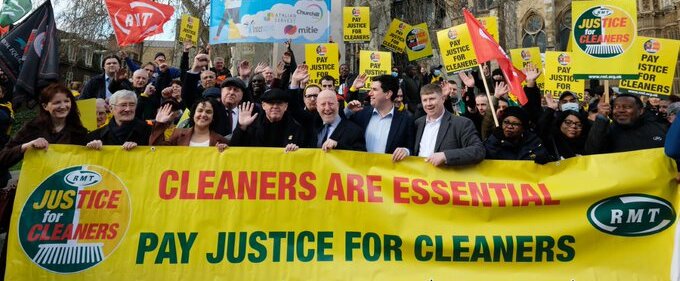 End rail outsourcing – bring our cleaners back in-house!RMT estimates that more than £400 million of the railway's money is lost to outsourcing and sub-contracting firms every year. The profits from Churchill’s contract at GTR – who operate Thameslink, Southern, Great Northern Services, and Gatwick Express services – could be enough to employ the equivalent of 83 additional cleaners or 160,000 extra hours of cleaning. The creation of Great British Railways is a big step forward, ending profiteering by train operating companies and creating an integrated publicly owned railway. But too many people are still being left out, including tens of thousands of outsourced and sub-contracted workers. Railway workers in outsourced companies work just as hard and contribute just as much to public transport as those directly employed. They deserve to see the benefits of public ownership too. Add your name to call on the CEO of GTR to end outsourcing, starting with Churchill cleaners.1,750 of 2,000 SignaturesCreated by RMT Union
 -
.png) Save the Institute of Orthopaedics Library!Digital systems cannot replace specialist expertise The Orthopaedics Library is a highly specialised service, supporting staff and students in clinical orthopaedics, musculoskeletal sciences, rehabilitation, and biomedical engineering. Digital resources cannot replace the various specialist expertise provided by on-site library staff, such as guidance on using clinical databases, guaranteed library skills support for finding relevant literature, or support gaining rapid and accurate evidence retrieval necessary for ongoing healthcare education. Libraries build clinical and educational communities The Institute of Orthopaedics Library is an important site for building the clinical and educational community that bolsters the aims of UCL and its NHS partners. Removing the physical library space risks weakening collaboration between clinicians and researchers and remove specialist environments, impairing clinical research and learning in the process. Libraries closures hurt students and accessibility Closing the Institute of Orthopaedics Library removes guaranteed access and space for students and staff based on the Stanmore campus, as well as limiting access to library resources and services. It also reduces access for certain disabled users, who require adapted study environments and staff working on-site. Those with limited or unreliable digital access will also be disadvantaged, lacking the computers, specialist terminals, and staffed support environments that currently allow them to access digital resources. Staff face redeployment and/or redundancy All but one library staff member at the Institute of Orthopaedics Library face being moved to ringfenced vacancies within LCCOS. These posts are based at sites almost an hour from their current Stanmore site. Many of these jobs deemed suitable for ringfencing are substantially different from the roles these staff currently hold. The proposals also put certain staff at risk of redundancy and/or downgrading. These are specialist staff with years of service to UCL - to treat them this way is simply unacceptable. A rushed process UCL LCCOS management announced these proposals on 11 May. They intend to only hold a month-long consultation process, with the aim to close the library by 1st September. This is an incredibly rushed timeline, which does not allow time for meaningful consultation with affected staff and students, and would add immense workload pressures on these same staff who will expected to undertake the preparatory work necessary to close the library. We must stop UCL’s specialist site closure trend In recent years, several specialist services have been closed in areas such as Eastman Dental, Ear Nose and Throat, and Ophthalmology. This reflects a wider trend towards centralisation of services in UCL and closure of remote access sites. Closing the Orthopaedics Library would continue this trajectory, and will likely unnerve dedicated staff in similar, smaller library sites.586 of 600 SignaturesCreated by Matthew Lee
Save the Institute of Orthopaedics Library!Digital systems cannot replace specialist expertise The Orthopaedics Library is a highly specialised service, supporting staff and students in clinical orthopaedics, musculoskeletal sciences, rehabilitation, and biomedical engineering. Digital resources cannot replace the various specialist expertise provided by on-site library staff, such as guidance on using clinical databases, guaranteed library skills support for finding relevant literature, or support gaining rapid and accurate evidence retrieval necessary for ongoing healthcare education. Libraries build clinical and educational communities The Institute of Orthopaedics Library is an important site for building the clinical and educational community that bolsters the aims of UCL and its NHS partners. Removing the physical library space risks weakening collaboration between clinicians and researchers and remove specialist environments, impairing clinical research and learning in the process. Libraries closures hurt students and accessibility Closing the Institute of Orthopaedics Library removes guaranteed access and space for students and staff based on the Stanmore campus, as well as limiting access to library resources and services. It also reduces access for certain disabled users, who require adapted study environments and staff working on-site. Those with limited or unreliable digital access will also be disadvantaged, lacking the computers, specialist terminals, and staffed support environments that currently allow them to access digital resources. Staff face redeployment and/or redundancy All but one library staff member at the Institute of Orthopaedics Library face being moved to ringfenced vacancies within LCCOS. These posts are based at sites almost an hour from their current Stanmore site. Many of these jobs deemed suitable for ringfencing are substantially different from the roles these staff currently hold. The proposals also put certain staff at risk of redundancy and/or downgrading. These are specialist staff with years of service to UCL - to treat them this way is simply unacceptable. A rushed process UCL LCCOS management announced these proposals on 11 May. They intend to only hold a month-long consultation process, with the aim to close the library by 1st September. This is an incredibly rushed timeline, which does not allow time for meaningful consultation with affected staff and students, and would add immense workload pressures on these same staff who will expected to undertake the preparatory work necessary to close the library. We must stop UCL’s specialist site closure trend In recent years, several specialist services have been closed in areas such as Eastman Dental, Ear Nose and Throat, and Ophthalmology. This reflects a wider trend towards centralisation of services in UCL and closure of remote access sites. Closing the Orthopaedics Library would continue this trajectory, and will likely unnerve dedicated staff in similar, smaller library sites.586 of 600 SignaturesCreated by Matthew Lee -
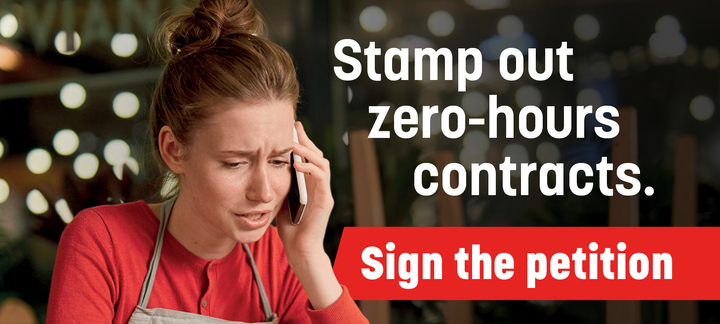 Stamp out zero-hours contracts: protect all workers from exploitationIn the new Employment Rights Act, the government committed to offering workers: • an automatic right to a contract that reflects their regular hours, • notice of their shifts, • and compensation for cancelled shifts. The consultation suggests a maximum number of contracted hours you can have to be entitled to these new rights. Protections could be limited to people currently working very low hours each week. Instead, unions are calling for these rights to cover all of us. Failing to get this right could create a race to the bottom, with employers offering contracts at the new legal minimum, simply raising the floor slightly above zero hours. Rent, bills, food, and childcare don’t disappear if your hours get cancelled. However many hours you work, you need certainty to plan your life. Together, let's fight back against bad employers and deliver the secure contracts we deserve. Add your name today.30,959 of 35,000 Signatures
 -
 End outsourcing at Southeastern TrainsThe creation of Great British Railways is a big step forward, ending profiteering by train operating companies and creating an integrated publicly owned railway. But too many people are still being left out, including tens of thousands of outsourced and sub-contracted workers. The use of outsourcing and sub-contracting is a scam, designed to siphon off profits from the railway by creating low paid and precarious work and driving down the quality of working life. RMT estimates that more than £400 million of the railway's money is lost to outsourcing and sub-contracting firms every year. Outsourcing and sub-contracting are worse for passengers too, leading to dirtier trains and stations and a poorer overall service. Since 2020, Southeastern Trains has contracted out its cleaning to a company called Churchill. Churchill have provided an inferior service and profited from this contract. In the last two years, they have skimmed more than £50 million in dividends to their shareholders while passengers have seen worse standards and workers have struggled to get by. Now Churchill’s contract is up and there is a golden opportunity to bring these workers into Great British Railways, end the profiteering, create better jobs and a better service for passengers.1,415 of 2,000 SignaturesCreated by RMT Union
 -
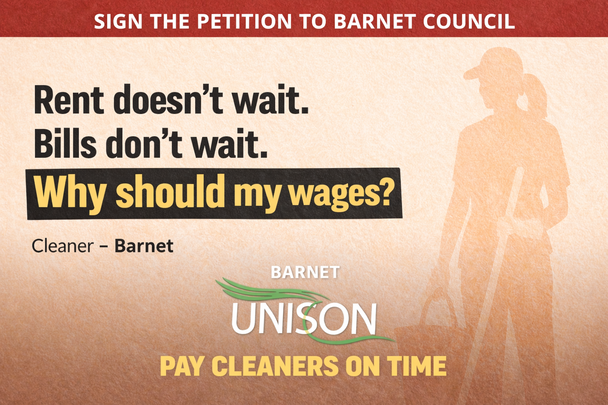 Pay Barnet’s cleaners on time — and bring cleaning back in-houseCleaners on Barnet’s council cleaning contract—employed by Norse Group—are among the lowest-paid workers delivering public services in one of the richest cities in the world. They keep our council buildings and schools clean, safe and running, yet they can be left waiting around 10–12 days after the end of the pay period to receive wages they have already earned. They are paid every four weeks, but the pay arrives nearly two weeks after the work period ends. For workers living week to week, that delay creates real hardship: rent, bills, food and travel costs don’t wait. It also creates a clear two-tier situation where outsourced staff can be treated differently from directly employed council staff. On top of that, many contractors delay implementing the new London Living Wage rate until 1 April even though it is announced in October—leaving low-paid workers waiting months for an uplift that is meant to reflect the real cost of living. Barnet Council should set fair standards for any contractor that wants to provide services in Barnet: pay workers on time and pay the Living Wage when it is announced. If outsourcing cannot deliver basic fairness and accountability, then cleaning should be brought back in-house at the earliest opportunity.281 of 300 SignaturesCreated by Barnet UNISON